Solopreneur's Guide To Business Mastery with Kathy Ennis | 122
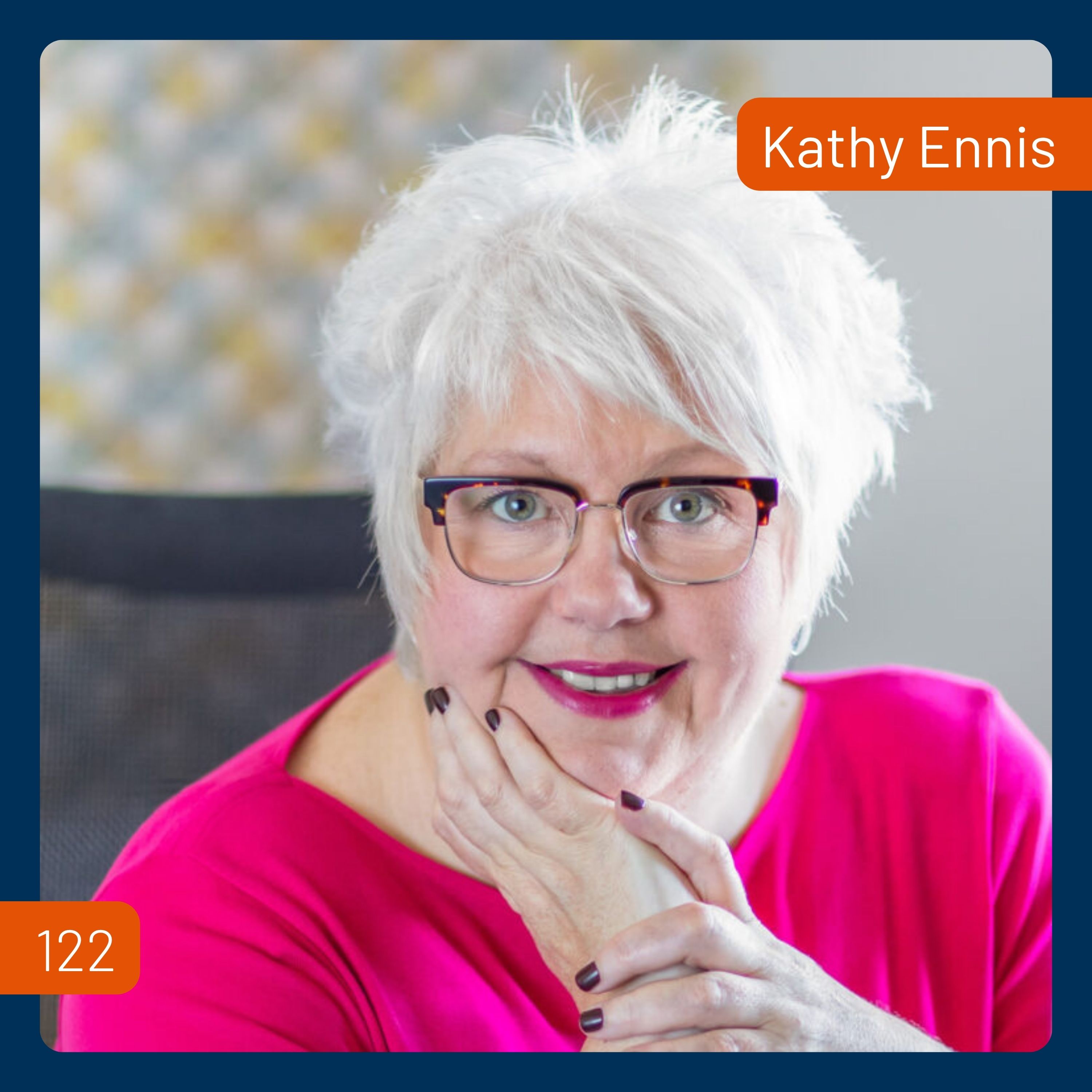


Host Jon Clayton welcomes Kathy Ennis of Little Piggy Ltd to Architecture Business Club to discuss why many solopreneurs and micro business owners struggle and what drives success. Kathy explains that talented people often rely on passion and “window dressing” marketing without learning core business skills, especially planning and cashflow forecasting. She outlines her five “Ps”: people (start with psychographics and choose who you want to buy from you), product (for services, productise offers into clear packages and entry levels), price (set targets based on business costs, salary, tax and profit, then align pricing with customer and offer), promotion (balance brand and sales marketing; go beyond social media with networking, lead magnets and email), and productivity (allocate time to run the business, build systems, and outsource).
—
Today’s Guest
Kathy Ennis is the founder of LittlePiggy and an award-winning Business Mentor who specialises in working with Solopreneurs, Freelancers and Side-Hustlers to build businesses that actually work and bring them the success they deserve.
After 20 years in the corporate world, Kathy launched her own business in 2000 at 40, knowing nothing about business. It didn't all go to plan – redundancy, a financial crisis, and even pension fraud tested her resolve – but she learned, adapted and built something sustainable. Those hard-won lessons became the foundation of everything she now teaches.
With over 26 years of running her own businesses, Kathy knows that talent and passion aren't enough. You need the business fundamentals. That's why she developed her 5Ps framework – People, Products, Price, Promotion and Productivity. It's a practical, proven approach that takes clients from assumptions and guesswork to clear strategy and consistent profit.
Kathy works one-to-one with business owners and delivers training through organisations including Enterprise Nation and Visionnaires, where she tutors and coaches on start-up and business growth programmes. She previously tutored on the York St John University MBA programme and runs the Women Talk Business programme for the Business and IP Centre Norfolk. She's also a regular public speaker and workshop facilitator.
What sets Kathy apart is her straight-talking, no-fluff approach. She doesn't coach people on their feelings about business, she teaches them what they don't know. Because running a business is a skillset, and it's one you can learn.
—
Episode Highlights
00:00 Introduction
00:49 Meet Kathy Ennis
02:15 Why Solopreneurs Start
03:49 Passion vs Profit Gap
04:22 Planning Builds Profit
05:21 Architecture Iceberg Analogy
07:15 Unsexy Business Basics
08:54 Five Ps Framework
10:30 Know Your People
11:01 Psychographics Over Demographics
12:28 Choose Who Buys
13:47 Productising Services
19:40 Packages To Upsell & Downsell
25:35 The Golden Triangle Of Pricing
26:28 Turnover Not Salary
27:42 Tiered Offers Math
28:45 Supermarket Pricing Analogy
29:36 Spreadsheet Stress Test
30:17 Packages Versus Capacity
31:16 Avoid Salary Replacement Trap
33:26 Unemotional Numbers Mindset
34:47 Reevaluate Offer And Audience
35:21 Brand Versus Marketing
36:10 Beyond Social Media
37:52 Lead Magnets And Email
39:49 Productivity For Solopreneurs
41:33 Outsource To Build A Team
44:14 Final Takeaways And Wrap
—
Key Takeaways
Running a business is a skill you can learn
Just because you are great at what you do does not mean you automatically know how to run a business. Kathy points out that most solopreneurs are brilliant at their craft but do not understand the basics of business. The good news is that business skills can be learned. Once you start learning things like pricing, planning, and knowing your customers, you put yourself on much firmer ground.
Know your numbers before you set your prices
Do not just think about what you want to take home as a salary. You need to work out how much it costs to run your business, pay yourself, cover tax, and have a little left over to reinvest. Once you know that total number, you can work backwards to figure out your prices and how many clients you need. Using a simple spreadsheet to do this takes the emotion out of it and helps you make clear, sensible decisions.
Plan your marketing and do not rely on social media alone
Many small business owners rely too heavily on posting on Instagram or LinkedIn and hope that their work will speak for itself. Kathy says you need a proper marketing strategy that includes email, face-to-face networking, and things that bring people to you, like a free resource or a short introductory chat. The more people know you and what you do, the more likely they are to refer others to you.
—
Subscribe on YouTube (for upcoming video episodes!) 📺
Send a Voicemail to the show (we listen to every message!) 📢
Connect with Kathy Ennis on LinkedIn 🤝
Curious about podcasting? Click here to book a chat with Jon 🎧
Follow or Connect with Jon on LinkedIn 🤝
—
👇 And if you enjoyed this episode…
Please leave a 5-star review or rating wherever you listen to podcasts, and don’t forget to hit the subscribe button so you never miss an episode.
00:00 - Introduction
00:49 - Meet Kathy Ennis
02:15 - Why Solopreneurs Start
03:49 - Passion vs Profit Gap
04:22 - Planning Builds Profit
05:21 - Architecture Iceberg Analogy
07:15 - Unsexy Business Basics
08:54 - Five Ps Framework
10:30 - Know Your People
11:01 - Psychographics Over Demographics
12:28 - Choose Who Buys
13:47 - Productising Services
19:40 - Packages To Upsell & Downsell
26:08 - The Golden Triangle Of Pricing
27:01 - Turnover Not Salary
28:15 - Tiered Offers Math
29:18 - Supermarket Pricing Analogy
30:09 - Spreadsheet Stress Test
30:50 - Packages Versus Capacity
31:49 - Avoid Salary Replacement Trap
33:59 - Unemotional Numbers Mindset
35:20 - Reevaluate Offer And Audience
35:54 - Brand Versus Marketing
36:43 - Beyond Social Media
38:25 - Lead Magnets And Email
40:22 - Productivity For Solopreneurs
42:06 - Outsource To Build A Team
44:47 - Final Takeaways And Wrap
Speaker:
What makes the difference between a struggling and successful solopreneur
Speaker:
or micro sized business owner?
Speaker:
That is exactly what we'll be exploring on this episode.
Speaker:
We'll cover the biggest struggles for most solopreneurs, the five
Speaker:
key areas of your business that can affect your success, and we'll share.
Speaker:
Practical ideas on how to improve each of these areas and stick around to the
Speaker:
end where our guest will share a business resource that she can't live without.
Speaker:
Welcome to Architecture Business Club, the show that helps you build
Speaker:
a better business in architecture so you can enjoy more freedom,
Speaker:
flexibility, and fulfillment.
Speaker:
I'm your host, John Clayton, and if you're joining us for the first time,
Speaker:
don't forget to hit the subscribe button so you never miss another episode.
Speaker:
We are joined by Kathy Ennis, the founder of Little Piggy and an
Speaker:
award-winning business mentor who specializes in working with solopreneurs,
Speaker:
freelancers, and side hustlers to build businesses that actually work and
Speaker:
bring them the success they deserve.
Speaker:
What sets Kathy apart is her straight talking, no fluff approach.
Speaker:
She doesn't coach people on their feelings about business.
Speaker:
She teaches them what they don't know.
Speaker:
Because running a business is a learnable skill.
Speaker:
So head over to Little Piggy Ltd to learn more or click the link in the show notes.
Speaker:
We are going to talk about what makes the difference between a struggling and
Speaker:
successful business, particularly when it comes to, um, solopreneurs and those micro
Speaker:
sized business owners, which makes up.
Speaker:
The vast majority of businesses in the UK are, are those size of businesses.
Speaker:
So, um, it, it's really important that we talk about this and, and figure out,
Speaker:
you know, what makes the difference between the ones that struggle and
Speaker:
the ones that are more successful.
Speaker:
So, Kathy, you usually work mainly with, um, solopreneurs, so you
Speaker:
have a lot of experience in the, with those size of companies.
Speaker:
Um, what things about business do you find that they commonly struggle with?
Speaker:
Gosh, it, that's, that's the $64,000 question.
Speaker:
Um, I suppose if I were to, if I were to summarize it, let's step back
Speaker:
and think about why people start a business, particularly as a solopreneur.
Speaker:
Often it's because this is, this will be almost their second career.
Speaker:
So often you will find people who have.
Speaker:
Started working, doing something and decided that maybe the work
Speaker:
environment isn't the right place for them and maybe they've got a skill or
Speaker:
they've got a passion or a hobby that they could see becoming a business.
Speaker:
Okay.
Speaker:
So it is very rare for somebody to be a solopreneur, apart
Speaker:
from maybe if you were in, um.
Speaker:
Something like a, a caring type profession like therapy, counseling, um, or even
Speaker:
maybe something in beauty therapy.
Speaker:
It's actually really quite rare for people to be solopreneurs from day one.
Speaker:
Okay, so you have this thing where a lot of solopreneurs are
Speaker:
probably 30, 30 plus, maybe 40 plus.
Speaker:
Sometimes 50 plus.
Speaker:
So they're coming at it from a, um, a very different space.
Speaker:
They've worked, they know the world of work.
Speaker:
They've got a passion.
Speaker:
They now want to use that passion to make themselves the money to
Speaker:
live, replaces their salary, but also gives them adid extras Now.
Speaker:
The issue there is that often there is a lack of understanding
Speaker:
about what business actually means.
Speaker:
What running a business means they are passionate about what they do,
Speaker:
and often there is a feeling that if they attempt to convey that passion as
Speaker:
passionately as possible, that that will be enough to make people want to buy it.
Speaker:
And unfortunately that's not the way business works.
Speaker:
I talk about the, the link between passion and profit and the bridge
Speaker:
between those two things is, is planning.
Speaker:
And the vast majority of people do not want to hear about business planning.
Speaker:
They just want to hear about selling their.
Speaker:
Whatever it is that they're, that they're passionate about.
Speaker:
So that for me is, is the commonality that I come across is highly talented,
Speaker:
fantastically experienced, hardworking people who just don't understand
Speaker:
business and that it's a skill.
Speaker:
That you can learn and once you learn it, it's not a written that once you
Speaker:
do, everything's gonna be brilliant, but you're gonna be on a much firmer
Speaker:
footing in terms of creating that bridge between passion and profit.
Speaker:
if you think about the, your audience, you know, people that have spent all
Speaker:
that time studying architecture, studying design, um, probably sort of working
Speaker:
their socks off in, uh, different.
Speaker:
Architectural practices, et cetera.
Speaker:
You know, they have, they have a massive amount of skill and there are
Speaker:
probably lots of them that think, you know what, what I'd really like to
Speaker:
do is I'd like to do this for myself.
Speaker:
I'd like to have a little bit more freedom, a little bit more
Speaker:
flexibility, the ability to spend more time with the kids, or, you
Speaker:
know, doing the things that I like.
Speaker:
And so what I need to do is basically hang up my shingle.
Speaker:
And say to people, here I am and maybe get myself an Instagram account, uh, put up
Speaker:
a website about myself, go to networking.
Speaker:
Um, you know, do all of those kind.
Speaker:
Start a podcast.
Speaker:
You know, do, do all of those kinds of things.
Speaker:
But actually there are lots of things that sit in the background.
Speaker:
And again, take, I suppose taking the analogy of, of.
Speaker:
The architectural profession, it's, it's the same as, you know, you design
Speaker:
a building for functionality and when that building is erected and people go
Speaker:
in, they see the windows and the walls and the floors and all of that kind of
Speaker:
stuff, but that building doesn't work.
Speaker:
If there isn't electricity in there, there isn't water in there.
Speaker:
There isn't all of those facilities in there.
Speaker:
It would just be.
Speaker:
A shell and, and it's a very similar thing with, with a, with a business, is that
Speaker:
what you see is the tip of the iceberg.
Speaker:
What actually makes something work is the rest of the iceberg sitting
Speaker:
down there underneath that sea.
Speaker:
So often the sorts of things that you see people thinking they need
Speaker:
to work on is, I guess, the kind of marketing stuff, the kind of the
Speaker:
window dressing essentially, and not necessarily the fundamentals because.
Speaker:
Well, the quite honest, it's, it's not very sexy or interesting
Speaker:
or exciting for a lot of people.
Speaker:
Is it, you know,
Speaker:
Cashflow forecasting is not the most exciting and and sexiest thing on the
Speaker:
planet, but the fact is that without a proper cashflow forecast for your
Speaker:
business, you can't actually market your business because you don't know what
Speaker:
your pricing should be, and therefore you don't know how many of those
Speaker:
things at that price you need to sell in order to make the money you need.
Speaker:
Okay, so no, it may be not sexy.
Speaker:
But then in a block of flats, the chute that takes away the rubbish
Speaker:
from people's flats isn't sexy.
Speaker:
Um, but actually without it, Um.
Speaker:
the place would be quite stinky.
Speaker:
I.
Speaker:
You're right.
Speaker:
Like when it comes to sort of building design, there's so many essential
Speaker:
aspects that have to get considered.
Speaker:
It isn't just about the shiny work tops and the bifold doors, that sort of thing.
Speaker:
There's all this other stuff that, you know, like the right
Speaker:
foundations, the groundworks, um.
Speaker:
Structural design, like all of those things, fire safety, um, that
Speaker:
it's working in the background, but you don't necessarily see it.
Speaker:
You just see the shiny worktops and the bi-folds, you know?
Speaker:
So it's a little bit like that, I suppose, isn't it?
Speaker:
It's in, it's exactly,
Speaker:
exactly like that,
Speaker:
Kathy, you talk about five areas of business that, that make the
Speaker:
difference between a struggling and successful business, really.
Speaker:
So, um, could you quickly run through what those five areas are and then we can dig
Speaker:
into each of them in a bit more detail.
Speaker:
Sure.
Speaker:
Um, I'm a massive fan of alliteration, so I tend to do things using words
Speaker:
that start with the same letter.
Speaker:
But over the years, I've, I've come to the conclusion that there are five
Speaker:
things, as you say, that make a massive influence on how a, a business works.
Speaker:
Um, and each of them begins with P. So the, the five things,
Speaker:
um, that I look at are people.
Speaker:
That to the customer's End of things.
Speaker:
Product.
Speaker:
What is it you're selling?
Speaker:
Price, how much are you selling it for?
Speaker:
Um, promotion, how are you marketing?
Speaker:
And then productivity.
Speaker:
How are you getting everything done?
Speaker:
So those five things in a business I've, I've.
Speaker:
Contained it into those five.
Speaker:
It is a bit like if, if you're driving a car and, and the wheel is slightly
Speaker:
out of alignment or the, you know, one of the tires needs a little bit
Speaker:
more air in it, you're gonna have a bit of a bumpy ride in that car.
Speaker:
It, it's the same with a business.
Speaker:
If one of those five Ps is slightly out of alignment, then things don't run as
Speaker:
smoothly as they could or should.
Speaker:
Could we spend a few minutes focusing on the first one of those then?
Speaker:
So let's talk about the people aspect of the business.
Speaker:
So in order to sell stuff, we need customers.
Speaker:
Okay?
Speaker:
So we need, we need to know our people and, Of the five Ps, three of the Ps
Speaker:
work really, really intensely, closely.
Speaker:
Uh, I call it the golden triangle of people, product and price.
Speaker:
Okay.
Speaker:
So if we, if we think about the people aspect of it being the customer, the
Speaker:
person that we want to buy our product.
Speaker:
Often when businesses create a customer profile, they, number one,
Speaker:
they concentrate a lot on demographic.
Speaker:
You know, where do they live?
Speaker:
What do they drive?
Speaker:
How much do they earn?
Speaker:
Uh, what do they spend?
Speaker:
Where do they shop, what do they read?
Speaker:
Those kinds of things.
Speaker:
And those are really, really, um, important factors.
Speaker:
And particularly, for example, if you have a business that is geographically
Speaker:
based, you have to know whether you've got customers in, in that geographical area.
Speaker:
Sometimes, but not always.
Speaker:
People then go into what we call the psychographic end of things, which
Speaker:
is more to do with the emotions, the thoughts, and the feelings.
Speaker:
I would actually say that if you are starting to create a customer profile,
Speaker:
I would start from the psychographic.
Speaker:
First, because if you start from the demographic, you then start to
Speaker:
put people into these little boxes.
Speaker:
These are the people I work with.
Speaker:
And that could mean that you're only trying to target at men who are 45 and
Speaker:
whatever, you know, that kind of thing.
Speaker:
Whereas if you start from the psychographic, it's, it's people
Speaker:
with this problem, uh, people who want to solve this issue.
Speaker:
Uh, people who, uh, feel this way about that thing.
Speaker:
And that means that it opens up slightly the potential.
Speaker:
for for customers.
Speaker:
So you are not putting yourself into, into a little box.
Speaker:
The other side about the customers is that, again, a lot of people when
Speaker:
they're starting out will say, um, who do I think will buy from me?
Speaker:
And they'll start to create their customer profile of that.
Speaker:
I will always say to people, do not think who will buy from you.
Speaker:
Consider who you want to buy from you.
Speaker:
And start from that point because, uh, if we take pricing into account there,
Speaker:
uh, often I'll have people saying, well, I've created my customer profile,
Speaker:
which means I have to price my products at X, but I really need to earn y. And
Speaker:
my response to them is, well, set your prices at y. And target the people
Speaker:
that will pay Y and forget the X. And so that for me is, you know, you start
Speaker:
with what problems are you solving and who do you want to buy from, you.
Speaker:
Kathy.
Speaker:
I think that idea of, um.
Speaker:
You know, focusing on the, not the demographic, the psychographic.
Speaker:
Really interesting take on that.
Speaker:
'cause as you say, it could be that, you know, it isn't just the kind of,
Speaker:
you know, mend between 40 and 50.
Speaker:
It, it could be that it, it could be all sorts of different demographics
Speaker:
that share that same problem that you can help them solve.
Speaker:
So I love, I love the way that you've explained that.
Speaker:
After that, the next one is, um, product.
Speaker:
So what do you mean by that, particularly for.
Speaker:
Uh, maybe a service based business that's listening to this thinking.
Speaker:
Hang on a minute.
Speaker:
I don't sell the products.
Speaker:
I, I, I sell a service.
Speaker:
So can we clarify what we mean there when we talk about this?
Speaker:
Yeah, I think, uh, that, that again is, is, is a really another good question
Speaker:
because if you're gonna be s selling smelly candles for example, you know
Speaker:
that there's a manufacturing process in that and, you know, logistics
Speaker:
process in that and, and, and various.
Speaker:
various.
Speaker:
bits and pieces.
Speaker:
So when it comes to service-based industries, the, the thing is that
Speaker:
you are the product, and in essence, you sort of have to start thinking
Speaker:
about yourself as a tin of baked beans and, and how, how would you sell
Speaker:
this, this, this tin of bake beans.
Speaker:
What is your ingredients list?
Speaker:
You know, what is it?
Speaker:
What benefits do you bring to people, et cetera, et cetera.
Speaker:
But I think the thing about product is that with the service-based
Speaker:
business, the temptation is to say, um, I sell this skillset.
Speaker:
Okay, so I, I sell, um, coaching or mentoring or, um, tuition for school
Speaker:
aged children, whatever that might be.
Speaker:
That's, that's abs That's absolutely fine.
Speaker:
And it is true.
Speaker:
But what we should be doing is looking at how we can create.
Speaker:
Um, a series of what I might call product-based elements outta that.
Speaker:
So one of the easiest ways to consider it is that if you're doing some kind
Speaker:
of coaching or, or support, is that you might have, um, a, a set of sessions.
Speaker:
Okay?
Speaker:
So you'll often find coaches or therapists saying, you know, my sixth
Speaker:
session program or my 12 session program, that, that sort of thing.
Speaker:
it's a much easier way than to get across to your potential customers.
Speaker:
That there is often, that there is an end point because one of the biggest
Speaker:
problems with service-based businesses is that often if you are just selling
Speaker:
by the hour, your customer doesn't kn know how much they're gonna be
Speaker:
committing themselves to over time.
Speaker:
this is the thing with therapy.
Speaker:
You know, a lot of people might start working with a therapist and
Speaker:
it goes on and on and on, you know, and it could go on for years even.
Speaker:
Uh, so there's no understanding of how much that's, that's
Speaker:
actually going to, going to cost.
Speaker:
So.
Speaker:
I would say to everybody who, who's running a service-based business,
Speaker:
you need to start thinking about, um, what your low cost, mid cost,
Speaker:
and high cost, um, offer actually is.
Speaker:
So is it, in my low cost?
Speaker:
You get these three things in my mid cost.
Speaker:
You get those three things plus these two things.
Speaker:
And at the high cost, you get those five things plus these three things as well.
Speaker:
Okay.
Speaker:
Because then it allows your potential customers to choose
Speaker:
their entry point, their, you know, where, where they come in.
Speaker:
I'll give you a crisis example.
Speaker:
I run.
Speaker:
Um, I, I tend to work with people in.
Speaker:
Sets of sessions.
Speaker:
I'm not somebody who it, it's not coaching and mentoring where we start
Speaker:
and then it just goes on forever.
Speaker:
But with mine, um, one, they're aimed at people at different levels in
Speaker:
terms of their business experience.
Speaker:
But the second is that they're based on the amount of time that I
Speaker:
spend with them and the intricacy of the work that we do together.
Speaker:
So, uh, it means that people can self-select.
Speaker:
Where they come in, in terms of their, their business.
Speaker:
So if, if I was, if I was thinking about your profession as, as an
Speaker:
example, um, it could well be somebody who, uh, creates a di design concept.
Speaker:
So a customer just gets a design concept, or it might be the
Speaker:
concept plus initial drawings.
Speaker:
It might be the design concept, the initial drawings, and then
Speaker:
further more intricate drawings.
Speaker:
You could then add on things like dealing with the planning process.
Speaker:
You could deal, add on things like dealing with the, trades that you might be using.
Speaker:
so you could actually create service units based on the amount of those
Speaker:
things that you actually put in, which means that your customers can
Speaker:
come along and say, my budget is x, I can afford this, that they sell.
Speaker:
But what you might find is that their budget is that because they
Speaker:
don't know you, once they get to know you, sometimes they find a bit more
Speaker:
money and they move up the letter.
Speaker:
That makes sense.
Speaker:
Yeah.
Speaker:
Yeah.
Speaker:
So from a service provider's point of view, we're talking about, um,
Speaker:
productized services and having a menu where essentially we could have
Speaker:
the same process that we've got now, but the way that we, we present it.
Speaker:
So in the case of an architects, uh, and our architectural firm that's
Speaker:
providing architectural services that.
Speaker:
They can break down their, their overall service into some different packages.
Speaker:
So, um, you wanna call it the classic would be the sort of bronze, silver,
Speaker:
gold, or as you say, it could be that, well, this is concept design.
Speaker:
This is concept design plus planning, planning permission.
Speaker:
This is concept design plus planning, and or this is our full service where
Speaker:
we take it from inception to completion, project management, that sort of
Speaker:
Project management comes in
Speaker:
there and all, you know, all of all of that.
Speaker:
Yeah, yeah, yeah.
Speaker:
Absolutely.
Speaker:
And if you, I mean, I know we've spoken about this together ourselves, John.
Speaker:
If people think about the traditional, um, pricing table
Speaker:
that you see on a lot of websites.
Speaker:
So if you're gonna go in and buy a piece of software, um, or maybe you're
Speaker:
gonna sign up for some kind of web hosting service, you will find that
Speaker:
they will have a basic, essential, standard, mega, or whatever it might
Speaker:
be, and in each of them you'll see.
Speaker:
Underneath, you'll get this.
Speaker:
This isn't, and this is what your financial commitment is going to be.
Speaker:
The brilliant thing about that process is that.
Speaker:
It allows you to do both what we call upselling and downselling.
Speaker:
So it allows you to bring somebody on at quite a, a low level in terms of
Speaker:
investment, but once they get to know you and like you and see the good job you're
Speaker:
doing, it allows you then to upsell 'em into the more expensive end of things.
Speaker:
And similarly, if somebody's come in with mega bucks, it may well be that
Speaker:
they want to come back at another point, but they want something smaller.
Speaker:
But they will choose you because they know what a great service you've given
Speaker:
and that you offer something that is within the price range for this
Speaker:
smaller project that they're doing.
Speaker:
I I love the way that having something like that product menu,
Speaker:
um, it gives you a customers choice.
Speaker:
So.
Speaker:
They might come with an idea of what they need and what they want.
Speaker:
Um, you can advise them and recommend the best fit for them.
Speaker:
But then when they're getting to see what those other options are, they might
Speaker:
think, oh, well we were gonna go for that, but this option looks like actually
Speaker:
now we've seen this menu, actually that's a better fit for what we need.
Speaker:
So there is it.
Speaker:
It's giving them.
Speaker:
I guess a sort of sense of control as well in terms of being able to self-select
Speaker:
with your guidance as the service provider to help kind of steer them,
Speaker:
um, to the appropriate service level.
Speaker:
So yeah, that's really interesting take on how to position it.
Speaker:
I would also add in there, remember that your customers will be
Speaker:
coming to you with a perception of what you do, but not knowledge.
Speaker:
And so they will come along thinking that maybe it's X, Y, and z. And
Speaker:
that these kinds of things can happen quite quickly, but actually when
Speaker:
you start looking at the project, you realize that it's more complex
Speaker:
than they thought that it would be.
Speaker:
And that's where your expertise comes in and allows you to say, you know,
Speaker:
if we do this, that you've come to me, this is as far as you will go, um, but
Speaker:
actually in what you want to achieve.
Speaker:
If we add this bit and this bit in.
Speaker:
That means it will take the project right through to the end.
Speaker:
If we just do what you want to do, you're gonna be stuck halfway through.
Speaker:
So yeah, it remembering that our customers don't necessarily
Speaker:
understand what it is that we do.
Speaker:
Yeah.
Speaker:
I love that.
Speaker:
Um, something I saw.
Speaker:
Which is relevant.
Speaker:
Um, uh, a web designer that built one of my previous websites, she had this,
Speaker:
um, this, this great thing where when it got to the end of the build and then
Speaker:
there was gonna be additional things like hosting and potentially maintenance,
Speaker:
things like that, there was a proposal that came through outlining those options.
Speaker:
But I, what was really clever about it was that it basically sort of listed
Speaker:
all these things out that were like.
Speaker:
This is, these are things that have to get done.
Speaker:
So there was this big long list and it was like a tick box, kind of like,
Speaker:
who's gonna take responsibility?
Speaker:
Are you gonna do it?
Speaker:
Is this going in your, you putting the tick in your box that you are gonna do
Speaker:
all this stuff, or are we gonna do it?
Speaker:
And if we are gonna do it for you, then it's chargeable
Speaker:
and it's this much a month.
Speaker:
And I thought, you know what, if they hadn't mentioned that, I, I wouldn't
Speaker:
have known that actually half of those things actually needed to be done.
Speaker:
Um, because I am not a web designer, so I didn't know that there were certain
Speaker:
things that were still gonna be required.
Speaker:
Um.
Speaker:
And it did make me think about it, you know?
Speaker:
So, um, I think that's a smart thing that having that menu, it shows people
Speaker:
ways that you can help them with things that they perhaps didn't even
Speaker:
realize that they needed to think about because they're not the expert.
Speaker:
You are the expert in what you do.
Speaker:
Um, so unless you show them that and, and show them the breadth of the.
Speaker:
Skills and services that they might need on their project and
Speaker:
that you can help them with.
Speaker:
Um, otherwise they're not gonna know.
Speaker:
'cause they, they're coming with from, from their perspective and what they
Speaker:
know, which, unless they, you know, in the case of an architect, unless
Speaker:
they're a qualified architect, you know, an architecture, a technologist,
Speaker:
they're not gonna know what they need.
Speaker:
And I love that analogy of the tick box.
Speaker:
Because actually this kind of thing, even before you have your first conversation
Speaker:
with a potential client, it's really great to provide something like that
Speaker:
with this list of everything that needs to, because they won't know, you know,
Speaker:
they, they, they just, they won't know.
Speaker:
Um, and it starts then to open up their eyes to the breadth of a project.
Speaker:
Could we talk about pricing, Kathy?
Speaker:
I mean, this is a real struggle for, uh, a lot of business owners.
Speaker:
What's your take on pricing services?
Speaker:
You need to think about how much money you want, how much money do you want?
Speaker:
Um, and as I say, this goes back to the, the, the type of, the type of customer.
Speaker:
So if, if you think about high street shops, I don't know, you
Speaker:
think about something like pound land, um, marks and Spencers, uh,
Speaker:
Waitrose, those kinds of things.
Speaker:
We know that each of those has.
Speaker:
A certain key customer type.
Speaker:
Okay.
Speaker:
It doesn't mean that people from all over don't shop in those places, but actually
Speaker:
they have a target market grouping.
Speaker:
Okay?
Speaker:
So we start thinking about the kinds of people that we want to work with, but
Speaker:
we have, this is why I said this is this golden triangle in terms of pricing.
Speaker:
We have to think about where we're pricing it in terms of the quality
Speaker:
of the product that we are creating.
Speaker:
Also the people that we are, that we are targeting.
Speaker:
So if a business wants to do, for want of a better term, quick and dirty work,
Speaker:
you know, and I don't mean bad work, I just mean that it's high turnover, um,
Speaker:
at, at lower cost, then their customer group is gonna be very different.
Speaker:
Whereas if they want to do things that are slightly more quality,
Speaker:
more in depth, longer term, it's, it's gonna be much more costly.
Speaker:
So therefore their customer profile will be different again.
Speaker:
So when it, when it comes to pricing, one of the first things I get people
Speaker:
to think about is, how much money do you actually need coming in?
Speaker:
And I don't mean how much money do you need to earn?
Speaker:
I mean, how much money do you need coming into the business?
Speaker:
Because you need to know exactly how much the business costs to run,
Speaker:
and then you need to know how much money you need to pay yourself.
Speaker:
And in a cashflow forecast, one of the lines that you actually put in there is.
Speaker:
Salary.
Speaker:
Um, although it's not a tax deductible thing because you have to pay tax
Speaker:
on it, it is a cost in the business.
Speaker:
So if you decide, if you see that, let's take a number that
Speaker:
maybe I can divide, um, by 12.
Speaker:
If you, if it works out that your target, um.
Speaker:
Turnover for a year, which will cover all of your business costs.
Speaker:
Uh, paying you some money, uh, taking in enough to pay the tax man and a,
Speaker:
a tiny little bit for profit so that you can maybe reinvest in a updated
Speaker:
website or something like that.
Speaker:
If you were looking at, say, a turnover about 60,000, you know,
Speaker:
that you'd be looking at bringing in about 5,000 pounds a month.
Speaker:
Okay.
Speaker:
And.
Speaker:
Where this applies to the pricing end of things, and it comes back to what I was
Speaker:
saying about products and the idea about having products at slightly different
Speaker:
price levels is it's then thinking about, well, if I've got a product that is,
Speaker:
um, a hundred pounds and I know that I can get 50 of those sold in a month.
Speaker:
You know, happy, happy days.
Speaker:
Okay.
Speaker:
Um, but I might only get 20 of them sold, but I might then have
Speaker:
something that costs a thousand pounds and I might sell two of those.
Speaker:
So it is about creating this, um, it is about taking the number
Speaker:
that you are targeting in terms of a, a turnover figure that covers
Speaker:
all of the costs in the business.
Speaker:
And then thinking about your customers.
Speaker:
What their pocketbook will take in terms of what they will spend.
Speaker:
And then thinking about your pricing strategy around that.
Speaker:
So you know, if you know that you can go to little and buy a bar of 85%, um, cocoa.
Speaker:
Chocolate for one pound 29.
Speaker:
But if you go to Waitrose and you buy one that's the same size, the
Speaker:
same amount of, uh, cocoa chocolate in there, and it's five pounds 25,
Speaker:
you're gonna have to sell slightly different numbers, but you're gonna be
Speaker:
targeting slightly different customers.
Speaker:
I hope that makes sense, which is why I said, you know, it has to work on
Speaker:
those, those three compass points, the people, the product, and the price.
Speaker:
Because the price will always come from project, you know, projected or wanted
Speaker:
turnover, the people you're targeting and the products you're selling.
Speaker:
We can, I guess, stress test.
Speaker:
We could do this on a, a spreadsheet, run it through a calculator that we, we've
Speaker:
probably already got in mind, um, an amount for, for a salary that we want to
Speaker:
take, but then we are having to also allow for the business expenses, the running
Speaker:
costs, setting money aside for tax.
Speaker:
So it's then arriving at that.
Speaker:
Total revenue turnover figure for the year that's encompassing all of those things.
Speaker:
And some profit as well to be able to reinvest if you want
Speaker:
to, uh, to get to that figure.
Speaker:
And then breaking that down if we want to monthly and then
Speaker:
stress testing it against.
Speaker:
Well, how many of that package or service do we need to sell to achieve that number?
Speaker:
So let that example 60 K over the year.
Speaker:
Turnover, that's five KA month.
Speaker:
And then thinking, right?
Speaker:
So depending on what we charge, if, let's say you are, I mean, if
Speaker:
you had a a 5K package, then it's one a. So is that manageable to do?
Speaker:
If, if it's a 500 pound package, then it's, it's 10 a month, you know, have
Speaker:
you got enough time and resources to deliver 10 of that package a month?
Speaker:
You know?
Speaker:
Um, so that's a missing thing.
Speaker:
That's simple maths really at the end of the day.
Speaker:
But so many of us don't do it, particularly when we're starting out.
Speaker:
It has to, it has to be simple maths.
Speaker:
'cause I'm, I failed my CSE maths three times, so I do not have a maths
Speaker:
exam, uh, maths qualification at all.
Speaker:
I, I do have a calculator on my phone and, and that's what I use most of the time.
Speaker:
But I think it, it is this simplicity.
Speaker:
So yes, most, most definitely is about working out those, those figures.
Speaker:
Um.
Speaker:
One thing is if you're coming out and you're new into business, often the
Speaker:
temptation is to want to replace a salary.
Speaker:
So I was earning 40,000, therefore, I need to turn over 30, 40,000 in the business.
Speaker:
Well, you don't because, well, number one, that doesn't include your own costs.
Speaker:
So to your employer, you are probably costing 55,000, but it
Speaker:
doesn't, it doesn't give you money to actually invest into the business.
Speaker:
That's just salary replacement.
Speaker:
So you would need to think about, well if, if, if it's 55,000 is what
Speaker:
I was earning, 'cause I need that to pay my taxes, et cetera, et cetera.
Speaker:
My pension, you know, self invested pension, et cetera.
Speaker:
But now I know that I need at least 2000 pounds a month to run my business there.
Speaker:
Let's add on another 25,000.
Speaker:
Um, and you know, we're up to 80,000.
Speaker:
So
Speaker:
that then puts a completely different complexion on, on your
Speaker:
turnover and therefore your pricing.
Speaker:
I remember starting out in my early days and thought, what should I be charging?
Speaker:
And it was very much based on.
Speaker:
Yeah, no logic.
Speaker:
Yeah, it was very much a motion of like, you know, um, what was I
Speaker:
charged out at previous, at male company, how, how much do I think
Speaker:
people would pay for what I offer?
Speaker:
And it was thinking about me, me as in like, what should I personally
Speaker:
get for this, this value exchange?
Speaker:
Rather than thinking about what do I actually need to charge to actually
Speaker:
cover all of those running costs?
Speaker:
And it wouldn't be unusual.
Speaker:
For a small business that they, um, I mean, just as a rule of thumb, I mean.
Speaker:
Uh, whatever the number is that you want to take home, you could
Speaker:
sort of times that by two or three.
Speaker:
And then that's probably the kind of ballpark that I would think.
Speaker:
Um, as a starting point, you should be looking for a turnover target.
Speaker:
Like if I wanted 40 grand equivalent of a 40 grand salary, then you know,
Speaker:
I need to be targeting, you know, probably 80 to a hundred grands,
Speaker:
you know, in terms of turnover.
Speaker:
Otherwise.
Speaker:
There's gonna be some, you know, I'm not gonna have enough money to pay for
Speaker:
everything to run it, to promote it, uh, to pay the tax man, all those things.
Speaker:
The brilliant thing about numbers is that they are unemotional.
Speaker:
And the key thing that we need to do when we are running a business is we
Speaker:
need to sit often in an unemotional state, because when we are the business,
Speaker:
when people say no, sometimes it can feel like death by a thousand blows.
Speaker:
Okay?
Speaker:
Because it feels personal.
Speaker:
And you know, sometimes it can be, but actually the more we can step to one side
Speaker:
and use the logical side of our brains and use the numbers and the structural
Speaker:
things, the easier it becomes to make.
Speaker:
Proper business decisions rather than reacting emotionally.
Speaker:
So, you know, if you sit down with a, um, a spreadsheet, um,
Speaker:
you know, I've, I've got one.
Speaker:
If people want it, they're more than welcome to ask me for it.
Speaker:
A cashflow, standard cashflow forecast with all the calculations
Speaker:
built into it, and you start putting numbers into these places.
Speaker:
And there's a number in the bottom right hand box or cell on that spreadsheet.
Speaker:
That's an unemotional number that is just telling you the truth.
Speaker:
It's a calculation of all of those numbers you've put in.
Speaker:
And if it says a hundred thousand, you might need to take a gulp.
Speaker:
But then you need to sit down and think about, well, do I need to
Speaker:
reevaluate my customer profile?
Speaker:
Do I need to reevaluate my product offer?
Speaker:
Yeah, that's, that's, um, makes a lot of sense.
Speaker:
Kathy, we've, we've deep dived into those sort of first three areas.
Speaker:
Could we have a, a few minutes talking about, um, promotion?
Speaker:
That was the next pillar, wasn't it?
Speaker:
So many architectural firms sort of feel a bit like, oh,
Speaker:
well our work speaks for itself.
Speaker:
What are your thoughts on that?
Speaker:
Yeah, we know that promotional or marketing, um, is, is is a big thing
Speaker:
and you know, we, we ignore it.
Speaker:
Apparel.
Speaker:
I, I think the first thing to, to recognize is you need to
Speaker:
understand the difference between, um, brand building and actual.
Speaker:
Marketing for business, and often people either err on one side or
Speaker:
the other and very rarely stray.
Speaker:
So your marketing, your promotion activity, needs to cover, cover both.
Speaker:
This is who we are, this is what we believe, this is what we do, kind
Speaker:
of stuff, as well as this is what we sell, this is how we do it, and, and,
Speaker:
and those, those kinds of things.
Speaker:
So you need to come up with a strategy that allows you to integrate those.
Speaker:
You also need to think about your promotional activity as being
Speaker:
more than just social media, and you need to consider it as
Speaker:
being more than just online.
Speaker:
Uh, people steal by people in, in that sense.
Speaker:
So, um, networking, meeting, networking out of your own profession.
Speaker:
It's great talking to everybody who knows, you know, can cut through the
Speaker:
stuff because you can speak in shorthand, but actually they're not gonna be the
Speaker:
people that are gonna be buying from you.
Speaker:
It's gonna be people that don't know what you know.
Speaker:
Okay.
Speaker:
Um, so how is it you get out to them?
Speaker:
So it's, it's thinking about those kinds of, those kinds of things, even down to
Speaker:
the fact that, you know, if you do post anything out and people still do post
Speaker:
things out, making sure those envelopes have got the details of your business on,
Speaker:
because think about how many hands that envelope is gonna go through before it
Speaker:
gets to the person that you sent it to.
Speaker:
So it's, yes, it is great to have.
Speaker:
And if you're working in architecture, you know it is quite sexy.
Speaker:
You've got nice things to look at.
Speaker:
I mean, I don't even mind seeing pictures of groundworks 'cause
Speaker:
I find them very interesting.
Speaker:
But it's very nice seeing it from the ground upwards and that that
Speaker:
looks, that looks really nice.
Speaker:
Um, but actually they wanna know stuff about you.
Speaker:
They wanna know why you do what you do.
Speaker:
They wanna know why you.
Speaker:
Are so passionate about what you do, um, as well as the outcome of what you do.
Speaker:
They wanna know who your customers are, what your customers said, how
Speaker:
they think, those sorts of things.
Speaker:
Reviews, testimonials.
Speaker:
So marketing has to be a strategy.
Speaker:
It can't just be, you know.
Speaker:
I've got a post on LinkedIn three times a week.
Speaker:
You've also got to do things, implement things that that bring people to you
Speaker:
rather than you just pushing things out.
Speaker:
So for want of a better description, the lead magnet.
Speaker:
So whether that's a downloadable resource, whether it's the opportunity for somebody
Speaker:
to have a 15 minute, half an hour chat with you before committing to anything.
Speaker:
Those kinds of things.
Speaker:
Um, and the final thing I'll say there, and I will put a big, um,
Speaker:
plea into people, is that still one of the best, um, methodologies for.
Speaker:
Reaching out, but also engaging people is email marketing.
Speaker:
So, you know, I would say ignore that at your peril.
Speaker:
So Mo most, most definitely, it has to be a mixture face-to-face.
Speaker:
Online socials, uh, websites, email.
Speaker:
Um, yeah.
Speaker:
But the more people know you and know what you do, the more
Speaker:
likely you are to get referrals.
Speaker:
That's such a good point.
Speaker:
I think there's an overreliance, um, in this industry because
Speaker:
it can be quite visual.
Speaker:
So an overreliance on, um, sort of website portfolios, the kind of like we
Speaker:
build it, they shall come sort of thing.
Speaker:
And then, um, social media, like sort of Instagram, that sort of stuff.
Speaker:
But as you say, email.
Speaker:
It's that that's really overlooked.
Speaker:
You know, email marketing and face-to-face.
Speaker:
I mean, I think statistically most service-based business owners still get
Speaker:
most of their work through their network.
Speaker:
You know, word of mouth and referrals, and we don't lean into that enough.
Speaker:
You need word of mouth and word of mouth.
Speaker:
Okay.
Speaker:
So it's the
Speaker:
combination of, it's the combination of the two.
Speaker:
That's great.
Speaker:
Thanks for that, Kathy.
Speaker:
Um, could, could we have a minute or two talking about productivity
Speaker:
before we start to wrap things up?
Speaker:
So, um, what's your kind of definition of productivity, your thoughts on that?
Speaker:
I.
Speaker:
Productivity, getting stuff done.
Speaker:
So if you are a solo.
Speaker:
You have a business, you have your products that you're selling,
Speaker:
but at the same time, all of the businesses stuff has to happen.
Speaker:
And this is sometimes where the conflict comes and where.
Speaker:
This is where you get the wonky wheel because things get put off or put to
Speaker:
one side because, oh, I've got this project, gotta get this project finished.
Speaker:
I can't afford to do that.
Speaker:
It's where, uh, marketing activities always fall down.
Speaker:
Oh, I can't afford to post.
Speaker:
I haven't got time to post anything online because, you know, I've
Speaker:
got this project to finish.
Speaker:
So it's very much about how do you make sure you get everything done.
Speaker:
So the 80 20 rule, when you are starting a business.
Speaker:
20% of your time will probably be client facing.
Speaker:
80% of your time will probably be a business building, systems,
Speaker:
creating automations, creating all of those kinds of things.
Speaker:
As you get busier, the statistic will probably flip, so that 80%
Speaker:
of your time doing the stuff and then 20% of your time, uh, making
Speaker:
sure that the business is running.
Speaker:
If we think about a business week, and I, I always say to people, do not
Speaker:
count Saturdays and Sundays as part of your business week unless you want to.
Speaker:
It shouldn't be a necessity.
Speaker:
It should be a choice.
Speaker:
So if we think about Monday to Friday, the equivalent of one of those days
Speaker:
should be spent on running your business.
Speaker:
the thing is that you will be brilliant at what you do, but you
Speaker:
are not brilliant at absolutely everything that makes a business work.
Speaker:
So, although you may be a solopreneur, my biggest piece of advice is outsource.
Speaker:
You need, and this again, comes back into the pricing and the, you know, the
Speaker:
numbers because you know, if you, on, if you need somebody to answer phones
Speaker:
for you, um, field emails for you, um, send out quotes and estimates to people.
Speaker:
Um, do your social media, write your blogs, um, do your bookkeeping, do your
Speaker:
accounts, all of those kinds of things.
Speaker:
There are people out there.
Speaker:
That charge less per hour than you do.
Speaker:
And as long as they charge less per hour than you do, they are cost effective
Speaker:
because the more you pay them to do that stuff, the more time you've got to get
Speaker:
out and earn more money to be able to pay them, to do, to do that kind of stuff.
Speaker:
So you can still stay solo, but you've got a team.
Speaker:
And this is what we should and should be working towards websites.
Speaker:
Classic example.
Speaker:
A lot of people have got enough skill to be able to build a website, but have
Speaker:
they got enough skill to be able to build a website that actually properly
Speaker:
works for them to keep a check on it?
Speaker:
I mean, my website was hacked last week and you know, it is taken me a week
Speaker:
to clear out everything that was done.
Speaker:
Um, luckily I've got support and, you know, people helped
Speaker:
me and that that was brilliant.
Speaker:
If I didn't have that, I would be up the creek without a paddle.
Speaker:
Okay, so we need this support network around us.
Speaker:
We need to know the direction.
Speaker:
We need to know what we want to happen, but we need a team of people around us.
Speaker:
If you're at the beginning and you haven't got loads of money, job swap.
Speaker:
Okay?
Speaker:
Is there something I can do for you if you do this for me?
Speaker:
You know, there are loads of things that that, that you can do, but primarily
Speaker:
it's about making sure that your cashflow forecasting actually says, I'm gonna be
Speaker:
paying a bookkeeper 60 pound a month, 'cause they're gonna be doing two hours a
Speaker:
month for me, just making sure books are up to date, my invoices are going out,
Speaker:
I'm getting paid on time, all of that.
Speaker:
I don't have to worry about that.
Speaker:
I can be out having client meetings.
Speaker:
Okay.
Speaker:
So yeah, productivity is the process of getting stuff done.
Speaker:
Stick to what you do best and outsource the rest, I guess would
Speaker:
be the, the phrase, wouldn't it?
Speaker:
Yeah, my, you know, my little sayings, John.
Speaker:
Kathy, what would be the, the main thing that you'd like everyone to
Speaker:
take away from our conversation today?
Speaker:
I think the, the thing I would like people to, to take away
Speaker:
today is this, this understanding that business is a set of skills.
Speaker:
Entrepreneurship is something very different.
Speaker:
Entrepreneurship is this kind of Stephen Bartlett thing where you have
Speaker:
these big ideas and all this kind of stuff, but he didn't get to where
Speaker:
he is today by doing it all himself.
Speaker:
He used people that knew what they were doing, but business,
Speaker:
if we wanna run a business for ourselves, it is a set of skills.
Speaker:
It is learning various things.
Speaker:
It is learning.
Speaker:
You know how to do a customer profile, how to price your products, how to create
Speaker:
products out of a service based business.
Speaker:
You know, it is that kind of thing, and it will make a really,
Speaker:
really, really big difference.
Speaker:
I will then add onto that forward planning.
Speaker:
So not in the sense of a, you know, a standard business plan,
Speaker:
but actually having a target.
Speaker:
That you set yourself year on year that you measure yourself against in terms
Speaker:
of achievement, growth, development.
Speaker:
The problem with a lot of very small businesses is they work right in front
Speaker:
of their nose and they don't look far enough in advance, and therefore they
Speaker:
don't set themselves goals and targets that are, they're achievable, but they
Speaker:
are, you know, they're, they're bigger than they would normally do themselves.
Speaker:
that, that's a really good suggestion.
Speaker:
Was there anything else you wanted to add that we haven't covered?
Speaker:
I just think, I'd say to people that if, if they are struggling, you know,
Speaker:
if, if there are things that are getting on top of them, don't hold it in.
Speaker:
Make sure that you speak to somebody about it.
Speaker:
One of the, one of the biggest lessons I learned is also make sure
Speaker:
that every single person in your family knows exactly what it is
Speaker:
you are doing and how you do it.
Speaker:
Because the number of times I've come across people in my family attempting
Speaker:
to explain to somebody else who could be a prospective client, what
Speaker:
I do, and I hear them and I think.
Speaker:
I don't do that.
Speaker:
You, you know, it's, it's making sure that everybody is as clear as crystal
Speaker:
about what it is that you are doing, who you're doing it to, or for the kinds
Speaker:
of customers that you are looking for, and help them to be your advocates.
Speaker:
That's a great tip.
Speaker:
Thanks for that, Kathy.
Speaker:
Um, there's one other question I wanted to ask.
Speaker:
Um, what is one resource that you use in your business that
Speaker:
you couldn't live without?
Speaker:
Now this could be, it could be an app, a book, um, a gadget,
Speaker:
a anything, anything at all.
Speaker:
One, I can only choose one.
Speaker:
I I tell you what, what has made the biggest difference, and this
Speaker:
has made the biggest difference to time, is, um, a note taker.
Speaker:
So I, I work on Zoom, uh, most of the time because my clients are not.
Speaker:
Geographically, uh, close to me.
Speaker:
So I tend to work on Zoom and I, I use a note taker now, which means that I can
Speaker:
be a hundred percent in our conversation, not having to worry about the notes
Speaker:
and actually then not having to, uh.
Speaker:
Type them up or, or, you know, collate them after the meeting.
Speaker:
Uh, and a, a bot does that for me.
Speaker:
Um, for me, AI is, you know, there are some difficult things about it, but
Speaker:
it's probably the best, um, business tool that there is, there are so many
Speaker:
options with it, but a note taker.
Speaker:
That records those meetings, records what we're saying verbatim actually,
Speaker:
and then turns it into a set of notes with really clear action points.
Speaker:
that's that's been a godsend
Speaker:
I'm, uh, I'm quite a fan.
Speaker:
Um, I don't use one in every meeting, but then depending on what the type of
Speaker:
meeting it is, I'll, I'll use a note taker and it is really, really useful.
Speaker:
Um, Kathy, this has been great.
Speaker:
I've, I've really enjoyed this conversation and, um, I just
Speaker:
know it's gonna be so helpful for everybody that's tuning in.
Speaker:
Um, where's the best place for people to connect with you
Speaker:
though, if you wanna get in touch?
Speaker:
Well, if anybody fancies a chat.
Speaker:
If they go to my website, there are buttons all over the website
Speaker:
where people can, uh, book in just to have a bit of a chat.
Speaker:
It's not a sales call.
Speaker:
It is not a sales call.
Speaker:
It is definitely a, a, a conversation, half hour conversation about something
Speaker:
that they may want to talk about.
Speaker:
They're more than welcome to do that or come and find me on LinkedIn
Speaker:
or I'm on Instagram as well.
Speaker:
So, um, yeah, I'm, I'm in those, in those, places.


